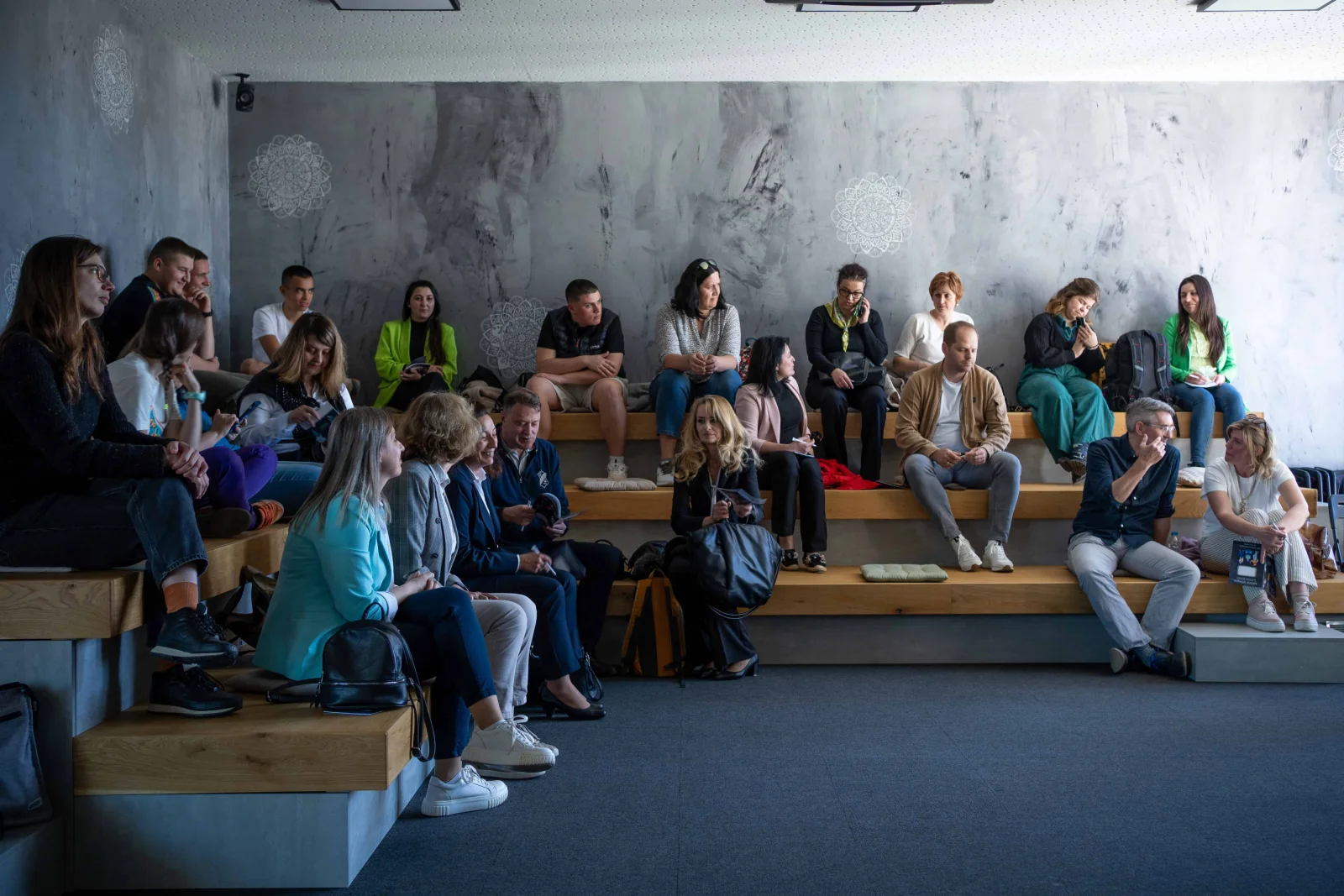
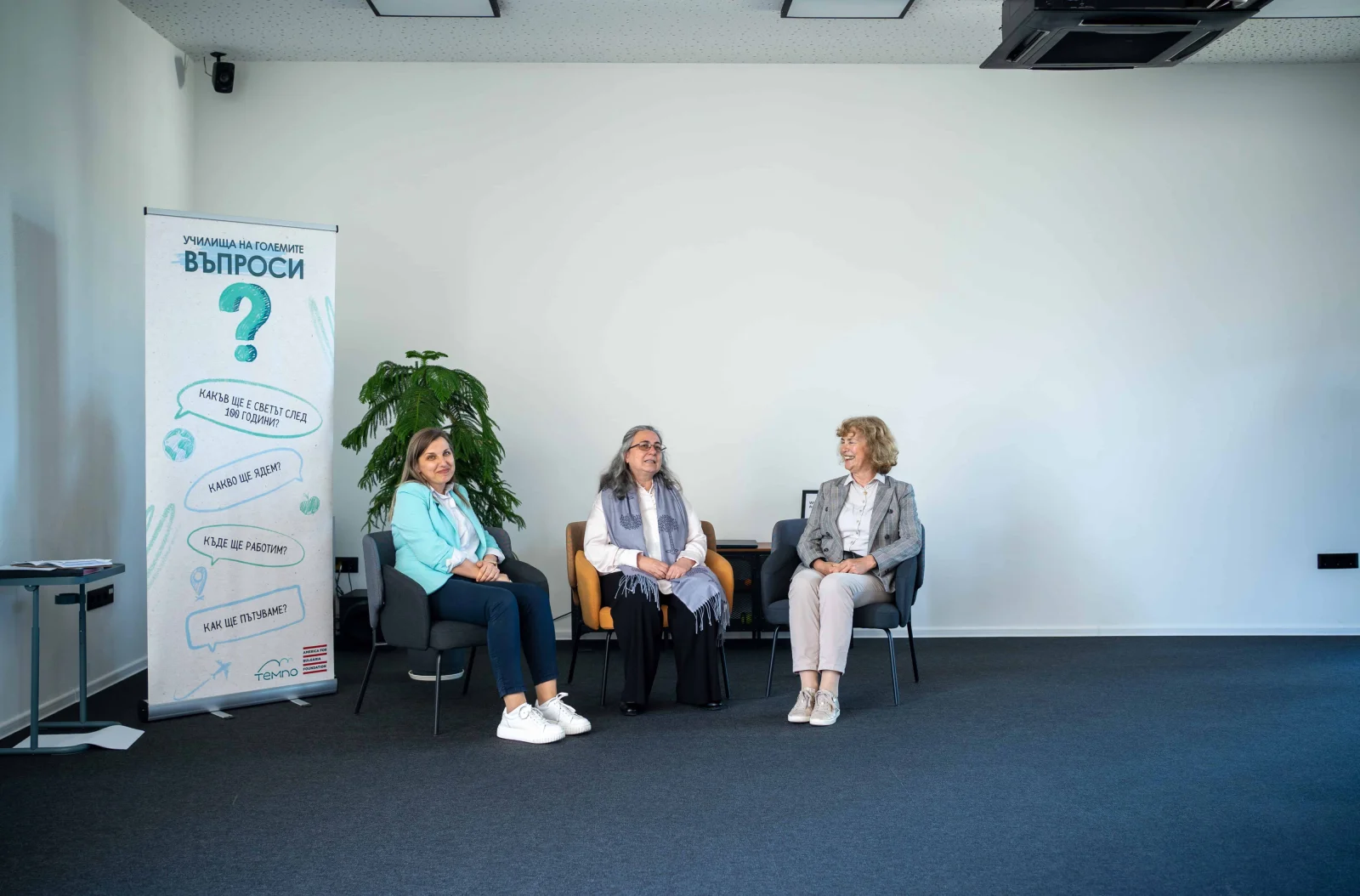
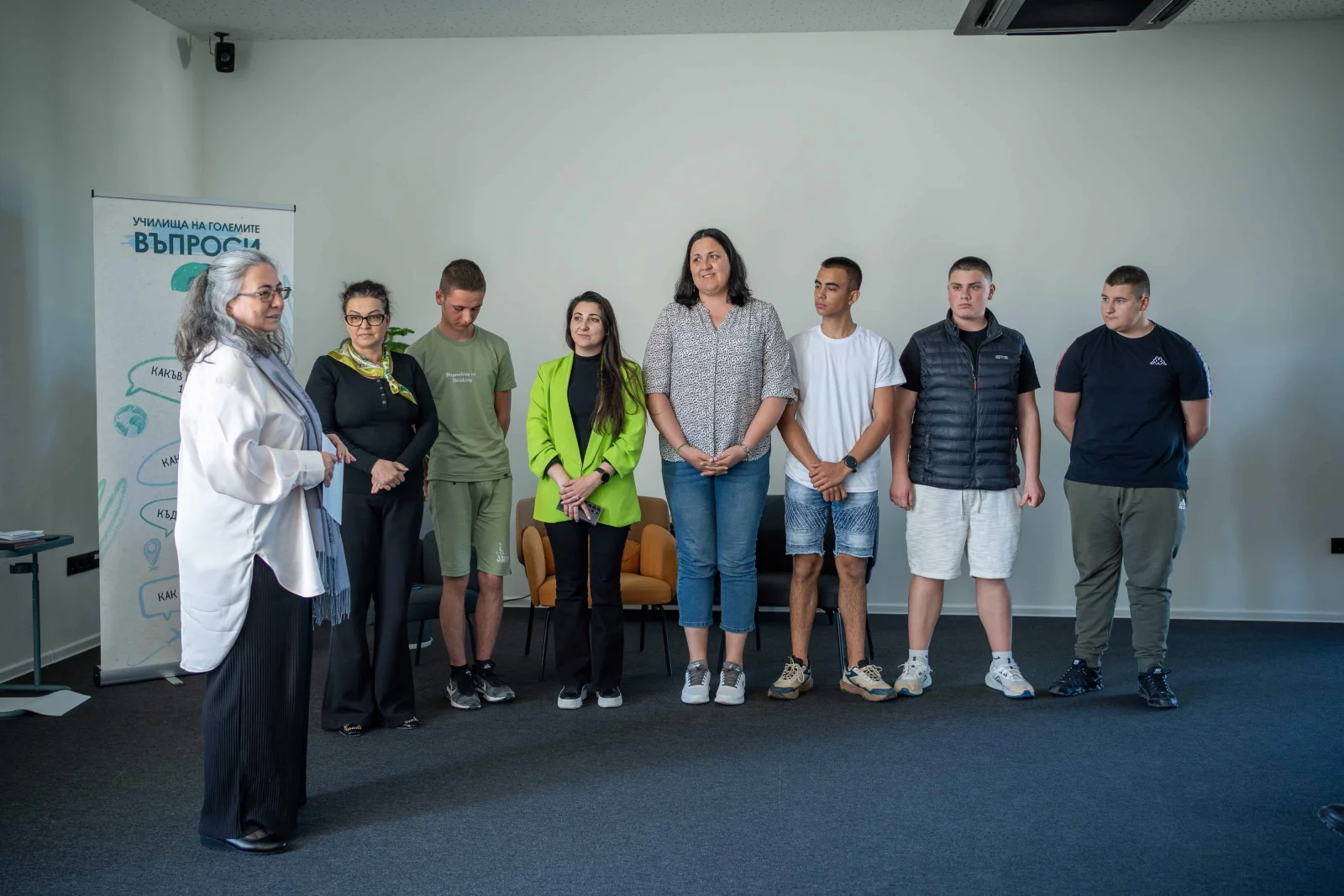
On 29 April we had the pleasure of hosting the closing event of "Schools of Big Questions", a project run by the TEMPO Foundation. Students from the Nikola Vaptsarov Vocational High School in Bansko came with their teachers and head teachers, joined by colleagues from Sofia and representatives of Bansko Municipality, to look back on a school year spent working on questions that have no easy answer.
What a "big question" is
The programme is built on a simple idea: pupils learn more, and learn to think for themselves, when the starting point is an open, difficult question rather than a chapter to memorise. Questions like What will the world look like in a hundred years? or Where will we work? have no answer at the back of the book. Getting anywhere with them means observing, experimenting, testing, reading the results and forming a view — the scientific method — and then building something, which is where engineering design comes in.
Supported by the America for Bulgaria Foundation, the project ran in schools in Bansko, Varna, Lyaskovets, Pazardzhik and Sofia. Each school worked with a mentor, an education specialist whose job was to help teachers create a classroom where asking is the norm and where a year's work can revolve around one genuinely hard question.
What the teachers trained in
The teacher sessions covered the mechanics of running a classroom this way:
- how complex problems are actually solved
- how to investigate the world with a scientific mindset
- how to write a big question, and how to work with one that already exists
- how to plan a term around a question
- how to run the lessons
- how to assess pupils fairly when there is no single right answer
The building blocks
- Big questions — open, hard, and impossible to settle without real research.
- Scientific method — observation, experiments, testing, analysing results, drawing conclusions.
- Engineering design — applying engineering principles to solve a problem and build a prototype.
- Teamwork — pupils cooperating on shared goals, dividing roles and agreeing on tasks.
- Authentic assessment — grading that takes in the whole person: emotions, collaboration and personal goals, not just the output.
What came out of it
By the end of the year the schools had designed meaningful, in-depth STEM experiences for their pupils; students were noticeably more independent, more creative and better at working in a team; a set of big questions now exists that pushes high-school students to explore the world and look for solutions; and the whole approach has been written up, tested and presented as a complete course — a model for bringing this kind of innovation into other Bulgarian schools.
"Working with each partner school is a real adventure. Everyone involved learns a great deal about themselves, about the others, and about possibilities they had not even suspected they had. We are genuinely glad to have faced the project's challenges together with the teachers and pupils, and we leave it with new knowledge, new confidence and even more motivation to reach more school communities that want to experience learning differently."
— Milena Leneva, project lead
Congratulations to everyone who took part — the energy in the room made it a day to remember, and we were glad to give it a home.
More about the project at tempo.education. Keep an eye out for the TEMPO Foundation's next initiatives.